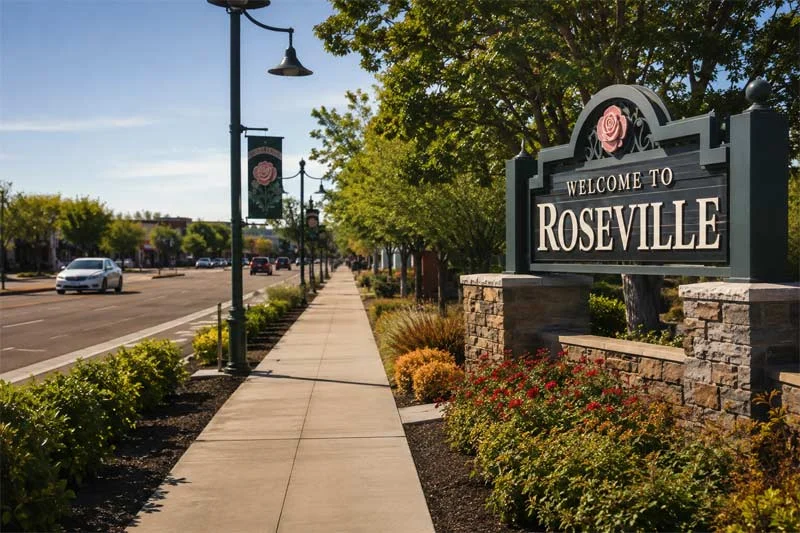
A new job off Highway 65, a growing family, or a Sacramento lease that has run its course. Whatever started it, you’re now scrolling through Roseville listings and wondering if the city lives up to its reputation. Before you sign anything, ask the real question: is Roseville, CA a good place to live for you, or only for the families in the brochures?
This guide covers what living in Roseville, CA actually involves. You’ll find honest pros and cons, what drives the cost of living, how the main neighborhoods differ, how schools and commutes work, which utilities the city runs itself, and what to expect when you move into a brand-new home on the west side.
Is Roseville, CA a Good Place to Live?
Roseville is a good place to live if you want newer homes, plenty of shopping, and parks close to Sacramento, but it’s a weaker fit if you want a walkable urban lifestyle or mild summers.
So where is Roseville, CA located? Roseville is a city in Placer County, about 19 miles northeast of downtown Sacramento by road along Interstate 80. Highway 65 runs north from the city toward Rocklin and Lincoln, and Roseville borders Citrus Heights, Granite Bay, and Antelope. Its main ZIP codes are 95661, 95678, and 95747.
The city grew up around the railroad and still has an older core near Historic Old Town. Most of its growth in recent decades, though, has come from master-planned neighborhoods to the west. For people coming from Sacramento, another suburb, or the Bay Area, the trade-off is usually the same: more space and newer housing in exchange for more driving and hotter summers. If that sounds like a fair deal, see how local moving across the Sacramento area works before you set a date.
Pros and Cons of Living in Roseville, CA
The biggest pros of living in Roseville, CA are newer housing, convenient shopping, and easy access to parks, while the main cons are summer heat, freeway traffic, and extra costs in newer neighborhoods.
| Pros | Cons |
|---|---|
| Newer housing. Roseville’s population more than tripled between 1990 and 2020, according to the U.S. Census, so much of its housing is relatively new, with modern layouts and garages. | Summer heat. July and August often bring days above 100°F, which shapes everything from your power bill to the best time to move in the Sacramento area. |
| Shopping close by. Westfield Galleria at Roseville and the retail along Douglas Boulevard and Highway 65 keep most errands local. | Freeway traffic. Interstate 80 and Highway 65 slow down at rush hour, especially toward Sacramento. |
| Parks and trails. Maidu Regional Park, Miners Ravine Trail, and neighborhood parks put green space within a short drive. | HOA dues and special taxes. Many newer communities add monthly HOA dues and special district taxes to the cost of a home. |
| Room to grow nearby. Downtown Sacramento, Folsom Lake, and the Sierra foothills are all within a reasonable drive. | Car-dependent layout. Few neighborhoods are walkable to everyday shops, so most trips need a car. |
Cost of Living in Roseville, CA
The cost of living in Roseville, CA depends mostly on housing, and HOA dues, special taxes, utilities, and commuting shape the rest of your monthly budget.
- Housing. Older homes near downtown and brand-new homes on the west side can differ a lot in price and monthly cost. Compare the full monthly payment, not just the list price or rent.
- HOA dues. Many newer communities have a homeowners association (HOA), a private organization that charges monthly dues and sets rules for the neighborhood. Read the rules before you buy, not after.
- Mello-Roos taxes. Some newer neighborhoods sit inside a Community Facilities District, a special tax district that funds public facilities and services. The City of Roseville lists these districts, including one in Sierra Vista, on its finance website. These taxes appear on the property tax bill, so ask for a recent one.
- Electricity. Power in Roseville comes from Roseville Electric, a utility owned by the City of Roseville, rather than PG&E. Check its current rates when you compare homes with neighboring cities.
- Cooling and commuting. Air conditioning runs hard from late spring to early fall, and fuel plus time on I-80 are part of the real cost if you drive to Sacramento every day.
Best Neighborhoods in Roseville, CA
The best neighborhoods in Roseville, CA depend on what you want most: older character, an established street, a bigger lot, a brand-new home, or an active adult community.
Downtown and Historic Old Town
Roseville’s oldest area centers on Historic Old Town and Vernon Street, close to the railroad that built the city. Homes here are older, lots are smaller, and some houses have front steps or tight driveways. Check where a moving truck can park before moving day, because street space can be limited.
Diamond Oaks and Woodcreek Oaks
These established neighborhoods sit around two golf courses, Diamond Oaks Golf Course and Woodcreek Golf Club. They suit buyers who want a settled street without construction nearby.
Stoneridge and Highland Reserve
Stoneridge was planned in the late 1990s on the city’s east side, between I-80 and Sierra College Boulevard at the Rocklin border. Highland Reserve is in north-central Roseville, not far from Highway 65 and the Galleria. If your new home has two stories or a long walk from the curb, plan extra time for heavy furniture.
WestPark, Fiddyment Farm, and Sierra Vista
Roseville’s west side is where most new construction is happening. You’ll find newer homes and HOA rules here. Sierra Vista, the planned area west of Fiddyment Road and north of Baseline Road, is being built out by eight separate landowners, so construction there will continue for years.
Sun City Roseville
Sun City Roseville is an age-restricted active adult community in northwest Roseville, built around golf courses and private recreation centers. If you’re asking whether Roseville, CA is a good place to retire, this is often the first area retirees tour, along with single-story homes elsewhere in the city.
Roseville, CA Schools: What Families Should Know
Roseville, CA schools are split across several districts, so the school your child attends depends on your exact address, not just the city name.
Most elementary and middle schools in the city belong to the Roseville City School District or the Dry Creek Joint Elementary School District, and some addresses fall in the Eureka Union School District. High schools are run by the Roseville Joint Union High School District.
Online lists of the best schools in Roseville, CA are a starting point, but they can’t tell you which campus a specific house feeds into. Before you make an offer or sign a lease:
- Ask the district which schools serve the address. Do this for elementary, middle, and high school separately.
- Check the data. The California School Dashboard shows state results for academics, attendance, and graduation at every public school.
- Tour the school. A short visit and a talk with the front office tell you more than a ranking does.
Commuting From Roseville to Sacramento and Beyond
Most Roseville residents commute by car on Interstate 80 or Highway 65, though trains and commuter buses also link the city to downtown Sacramento.
Interstate 80 is the main route to Sacramento and the Bay Area, and Highway 65 connects Roseville with Rocklin and Lincoln. On the west side, Baseline Road and Blue Oaks Boulevard carry much of the traffic from newer neighborhoods. Rush-hour delays on I-80 are the commute complaint you’ll hear most often.
If you’d rather not drive, Amtrak’s Capitol Corridor stops at the Roseville station, and Roseville Transit runs express commuter buses to downtown Sacramento during weekday morning and afternoon peak hours. Sacramento International Airport is about 25 miles away, roughly a 35-minute drive without traffic.
Before you commit to a home, drive the route to work at the hour you’ll actually travel.
Setting Up Utilities and Address Changes in Roseville
The City of Roseville provides its own electricity, water, wastewater, and garbage service, so most utilities for a new home are set up through one city account.
Start service through City of Roseville Utilities Customer Care at least two business days before moving day (the city accepts requests up to 60 days ahead), so the lights and water are on when the truck arrives. Electricity comes from Roseville Electric, the city’s own utility. Natural gas isn’t a city service, so set it up separately with the gas provider for your address.
A few more updates to handle in your first weeks:
- DMV. Update your driver’s license and vehicle registration through the California DMV online change of address. California Vehicle Code Section 14600 gives you 10 days after a move to report your new address.
- Trash day. Check your pickup schedule on the city’s website, so moving boxes and packing paper don’t pile up in the garage.
- HOA. If your new home is in an HOA, register with the association and ask about rules for parking and trash bins.
Moving Into a New Home in West Roseville
Moving into new construction homes in Roseville, CA is mostly about timing and access, because the house is often ready before the neighborhood around it is finished.
Start with the HOA. Some communities limit move-in hours or ask for notice before a large truck arrives, so read your association’s rules early. In gated sections, get the gate code or access instructions ahead of time and share them with your crew.
Next, plan for construction around you. Unfinished streets, contractor trucks, and empty lots next door can make it harder to park close to your door. Walk the street a few days before the move and pick the spot where the truck will stop.
Do your final walkthrough with the builder before anything is moved in. Note scratches, dents, and paint touch-ups in writing, so new-home defects don’t get mixed up with wear from moving day. Many west-side homes are two stories with fresh floors, so label every box with its room and ask for floor protection when you book local moving with Double Move.
One customer described a move across town into a new two-story home this way:
“They completed my entire move in just over 4 hours from Central Roseville to West Roseville, including unloading into a two-story home. … Everything was wrapped exceptionally well, handled with care, & transported without any damage. They also took great care to protect both my furniture & my new home while moving everything upstairs.”
— Kevin P., Central Roseville → West Roseville
How Double Move Helps With a Move to Roseville
Double Move runs one of its three offices at 2264 Americana Dr in Roseville, so the city’s older streets and newer gated communities are familiar ground for our crews. Each crew member is a trained W-2 employee who has passed a background check. Double Move holds license CAL-T 192712 from the California Bureau of Household Goods and Services (BHGS), is registered with USDOT (4027902), and is fully insured.
Taking apart and reassembling furniture, removing wall-mounted TVs, and providing a certificate of insurance (COI) for buildings that ask for one are part of the job. You get a free, non-binding time estimate in writing before you book. Coming from Sacramento or anywhere more than 10 miles away? California’s Double Drive Time rule then counts the drive between your two homes twice. Rates, service details, and the neighborhoods we cover are on our page for movers in Roseville, CA.
FAQ – Moving to Roseville, CA
What county is Roseville, CA in?
How far is Roseville from Sacramento?
What is Roseville, CA known for?
Is Roseville, CA safe?
Should I live in Roseville or Folsom?
Roseville vs Rocklin: how do they compare?
Planning Your Move to Roseville?
Once you’re sure Roseville, CA is a good place to live for your household, the next job is getting there. Read how local moving with Double Move works, request a free quote, or call +1 619-393-4722 to check open dates.