A new job in San Jose. Grandkids in San Diego. A smaller place closer to the coast. There are plenty of reasons to leave the Sacramento area without leaving the state. Moving within California is simpler than a cross-country move in many ways, but a 90-mile move to San Francisco and a 385-mile move to Los Angeles follow different rules, need different planning, and don’t always finish on the same day.
This guide covers what counts as an in-state move, who licenses California movers, the paperwork you should get before anything is loaded, and how to plan the two most common routes out of Sacramento. If you’re already comparing options for long-distance moves within California, it will also help you know what to ask.
What Counts as Moving Within California
Moving within California means your belongings are picked up and delivered inside the state, whether the trip is 20 miles or 500. The industry calls this an intrastate move. Intrastate moving in California is regulated by the state rather than the federal government, so the same rules apply whether you’re going from Roseville to Oakland or from Folsom to San Diego.
The number that matters most is 100 miles. Under state rules, moves shorter than 100 miles can be charged by the hour, while moves longer than 100 miles must be charged by weight and mileage. That changes how your estimate is built, so it helps to know which side of the line your route falls on.
| Route from Sacramento | Approx. distance | How it can be charged | Typical timing |
| Oakland | about 80 miles | By the hour | One day |
| San Francisco | about 90 miles | By the hour | One day |
| San Jose | about 120 miles | By weight and mileage | Often one day |
| Los Angeles | about 385 miles | By weight and mileage | Loading and delivery may fall on different days |
| San Diego | about 500 miles | By weight and mileage | Loading and delivery usually fall on different days |
If your route sits close to 100 miles, ask your mover which way your estimate will be calculated before you compare quotes.
Who Licenses Movers for Moves Within California
Moving companies that carry household goods within California must be licensed by the Bureau of Household Goods and Services (BHGS), part of the California Department of Consumer Affairs. BHGS licenses movers, investigates complaints, and enforces the state’s household moving laws and Maximum Rate Tariff.
You can check any mover in the BHGS license search in a couple of minutes. Do it before you pay a deposit, not after. Registration with the Federal Motor Carrier Safety Administration (FMCSA) is required only for moves into or out of California, so a USDOT number on its own isn’t proof that a company is licensed for an in-state move.
This is more than a formality. In July 2026, BHGS announced the results of enforcement sweeps in the Bay Area and Southern California: 30 citations, totaling $110,230, against moving companies working without a license or proper insurance. For more ways to vet a company, see our guide on how to hire movers in Sacramento.
What Your Mover Has to Give You Before Moving Day
For a move within California, your mover owes you specific paperwork, and most of it should arrive before the truck does. Based on the BHGS consumer guide, here’s what to expect:
- A visual inspection. The mover reviews and documents what you’re moving before giving an estimate. BHGS recommends doing it in person.
- A written estimate signed by the mover. It should list transportation and service charges, the payment method, and the type of coverage for your belongings.
- A change order if you add items. Remembered the garage shelves? Anything added after the inspection goes on a signed change order before loading, not on a surprise final bill.
- A moving agreement at least three days ahead. You and the mover both sign it before the move starts. For in-state moves, it should include a Not to Exceed Price: the most you can be charged unless there are change orders.
- A receipt for any deposit. Be cautious with companies that want a large deposit or a digital transfer up front.
Don’t let loading start until you have the signed agreement and understand the charges. And move irreplaceable items yourself: documents, jewelry, and family photos ride in your car.
Moving From Sacramento to the Bay Area
Moving from Sacramento to the Bay Area is usually a one-day job: load in the morning, drive west on I-80, and unload the same afternoon or evening. The drive is often the easy part. What shapes a Bay Area move is what happens at the destination.
When you’re moving from Sacramento to San Francisco, Oakland, or San Jose, plan around three things:
- Traffic. An early start beats the westbound I-80 slowdowns and the backups at the bridge approaches.
- Access. Steep streets, narrow lanes, and tight driveways can mean the truck parks farther from your door.
- Building rules. Many apartments and condos require an elevator reservation or a set move-in window, and some ask for a certificate of insurance from your mover. Book these as soon as you have a date, and share the details for both addresses with your mover.
“I used double move company to help me move from Sacramento to Hayward. They were professional and on time. They helped me move my boxes and furniture without any problems.” — Darrin N., Sacramento → Hayward
Parking Permits for a Moving Truck in San Francisco
A parking permit for a moving truck in San Francisco comes in the form of temporary Tow-Away No Stopping signs from the San Francisco Municipal Transportation Agency (SFMTA). The signs reserve curb space for the truck on your move date. Apply through the SFMTA online portal or by calling 311 at least five business days before the move; legal holidays don’t count.
Without a posted zone, the crew may carry everything from half a block away, and that adds time to the day. Other Bay Area cities set their own rules, so check with the city you’re moving to before you lock in a date.
Moving From Sacramento to Los Angeles and Southern California
Moving from Sacramento to Los Angeles means about 385 miles, most of it on I-5 through the Central Valley, so plan it as two parts: loading day and delivery day. Depending on the size of your home and the schedule, they may be the same day or different days. Get the delivery date or window in writing, along with a number to call while your belongings are on the road.
Moving from Sacramento to San Diego adds about another 120 miles and works the same way. A few habits make Southern California moves smoother:
- Have someone at the new address. If you’re driving separately, plan to arrive before the truck, with keys and building access confirmed.
- Pack a car kit. Medications, chargers, documents, a change of clothes, and basics for the first night travel with you, not on the truck.
- Plan for the heat. Summer days in the Central Valley often pass 100°F. Candles, electronics, and anything heat-sensitive need extra care or a seat in your car.
- Give fragile rooms more time. A longer drive puts more stress on boxes. If you’d rather not pack the kitchen or the art yourself, professional packing and unpacking can be added to the move.
How to Plan Loading Day and Delivery Day
The smoothest moves within California are planned at both ends at once. Use this timeline as a starting point, and our full moving checklist for everything else.
- 4–6 weeks out: Book your mover, schedule the visual inspection, and reserve elevators or loading docks at both buildings.
- 2–3 weeks out: Apply for street parking where needed (at least five business days ahead in San Francisco), set utility shut-off and start dates, and pack the rooms you use least.
- 1 week out: Review the moving agreement and Not to Exceed Price, share building rules and contact numbers with your mover, and set aside valuables and documents.
- Moving day: Walk through every room with the crew, check closets and the garage, and keep your phone on for updates.
- Delivery day: Have someone direct furniture to the right rooms, check items against your inventory, and note any damage before you sign.
After the Move: Updating Your Address With the DMV
After moving within California, update your address with the DMV within 10 days. You can do it through the DMV online change of address system, which takes about three days to process. Changing the address on your driver’s license doesn’t update your vehicle registration automatically, so update both in the same request. Then work through the rest of the list:
- Voter registration: update it at registertovote.ca.gov so you’re registered in your new county.
- Mail: file a change of address with USPS a week or two before the move.
- Everything else: your bank, employer, insurance, and subscriptions. Ask your car insurer whether a new ZIP code changes your policy.
How Double Move Handles Moves Within California
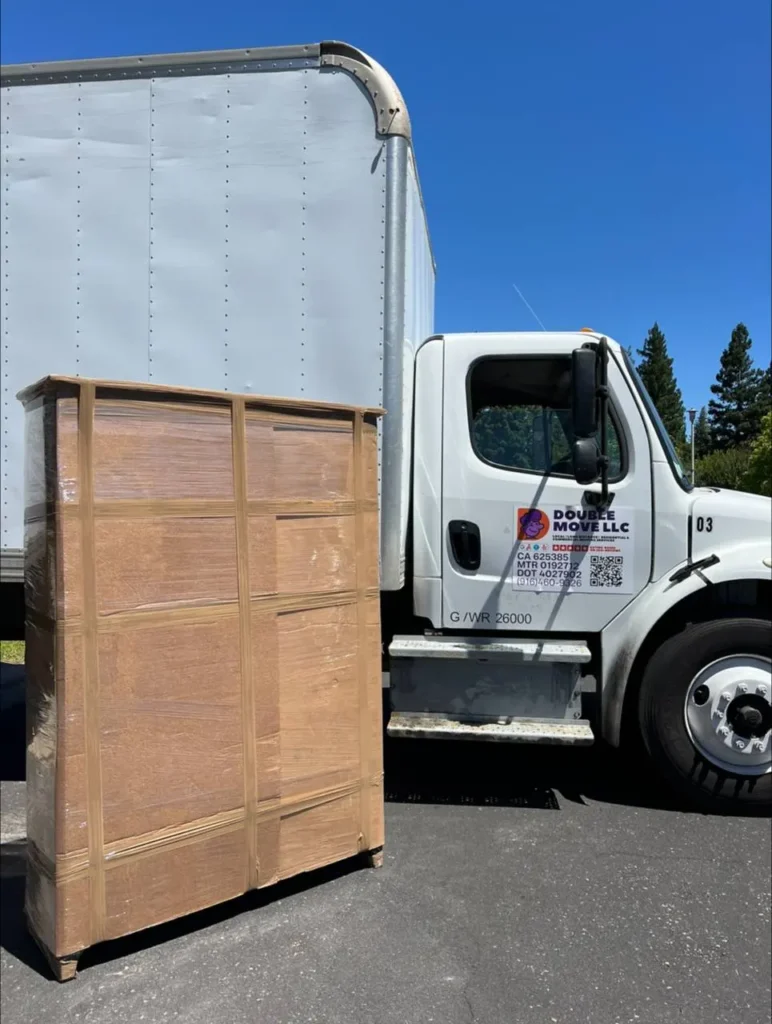
Double Move is a Sacramento-area moving company with offices in Roseville, Citrus Heights, and Folsom. We handle long-distance moves within California only, from homes and offices across Sacramento County to cities like San Francisco, San Jose, Los Angeles, and San Diego. Our movers are trained W-2 employees, background-checked, and never day laborers. We hold CPUC household goods permit MTR0192712 and USDOT number 4027902, and we’re fully insured.
Every move starts with a free consultation about your home, your belongings, and access at both addresses. The truck, fuel, crew, furniture pads, and floor protection are included, and you know the price before you book. You can learn more about our in-state long-distance moving service or call us with your route.
Frequently Asked Questions
How long does it take to move from Sacramento to Los Angeles?
The drive is about 385 miles, or about seven to eight hours for a moving truck with a stop or two. Loading and unloading add time based on the size of your home, so delivery may happen the same day or the next. Your mover should confirm the delivery date or window in writing.
Can a move from Sacramento to San Francisco be done in one day?
In most cases, yes. At about 90 miles, the route usually leaves enough time for loading, the drive, and unloading in one day. Parking, elevators, and stairs at the San Francisco address have the biggest effect on how long that day runs.
How do I check if a moving company is licensed in California?
Search the company’s name or license number in the BHGS license search on the Bureau of Household Goods and Services website. Any company carrying household goods within California needs a BHGS license. A USDOT number by itself isn’t proof of a California license.
Do I need a parking permit for a moving truck in San Francisco?
It’s strongly recommended. Temporary Tow-Away No Stopping signs from SFMTA reserve curb space for the truck, so the crew isn’t carrying furniture down the block. Apply at least five business days before your move.
How soon do I need to update my address with the DMV after moving within California?
Within 10 days of your move. You can submit the change online on the California DMV website, and update your driver’s license or ID and your vehicle registration in the same request, since one doesn’t update the other automatically.
Planning a Move Within California?
Whether you’re heading to the Bay Area or Southern California, a clear plan at both addresses makes moving within California much easier. Request a free quote or call +1 619-393-4722, and our long-distance moving team will walk you through your route, timing, and paperwork.